
Women Wealth and the World We Want
Introduction
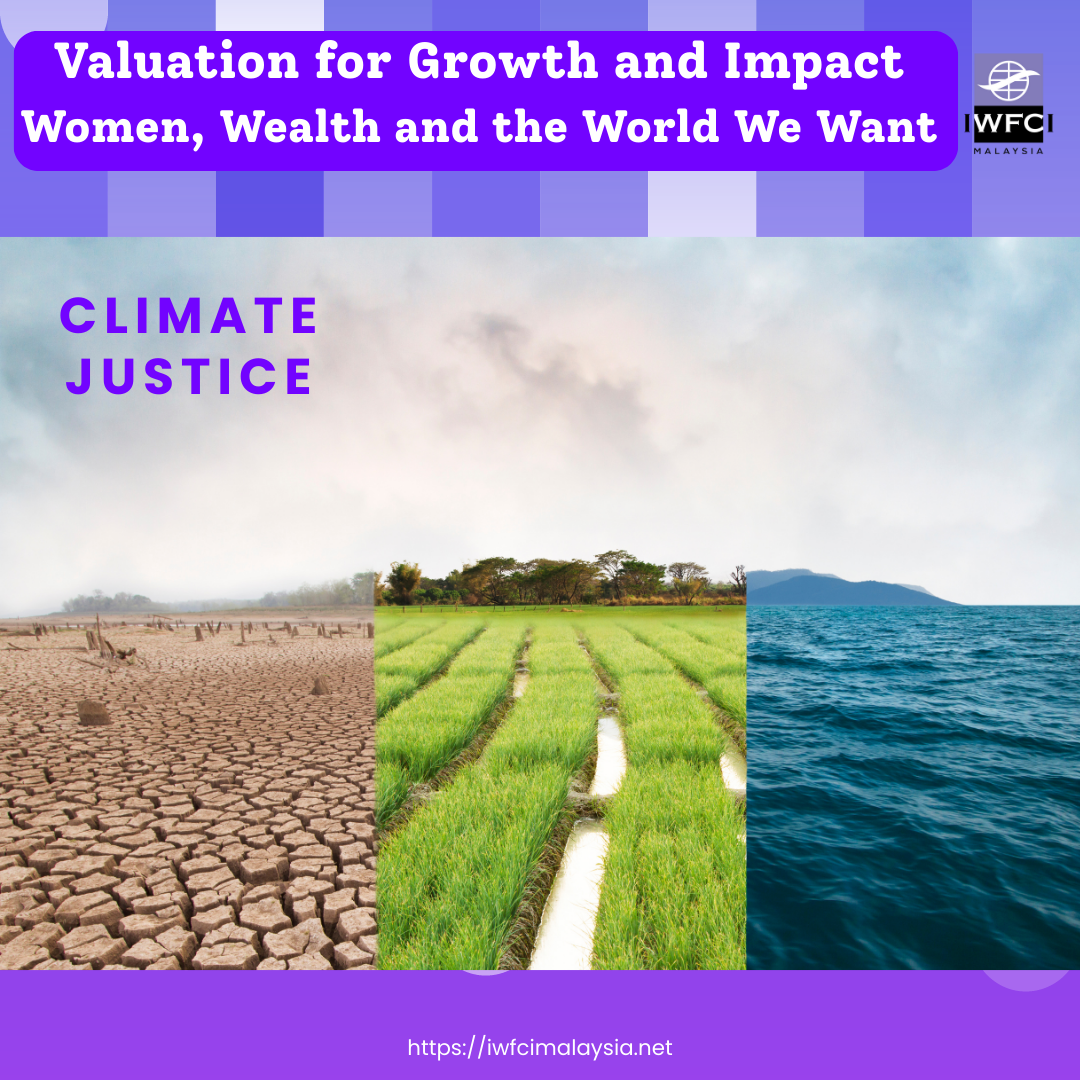
Climate change is no longer a distant threat—it is a present reality reshaping markets, communities, and businesses. For women-led MSMEs, climate justice is not just an ethical concern; it is a valuation driver. Investors, customers, and policymakers increasingly look at how enterprises respond to environmental challenges. The question is: how do we measure value in a world where sustainability is central?
Climate Justice and Business Value
Climate justice emphasizes fairness in addressing climate change—ensuring that vulnerable communities, often women and youth, are not left behind. For MSMEs, this translates into:
- Risk management: Climate-related disruptions (floods, droughts, supply chain breakdowns) directly affect financial stability.
- Opportunity creation: Green innovation, renewable energy, and sustainable products open new markets.
- Reputation building: Businesses that champion sustainability gain trust and loyalty.
Valuation today must account for these dimensions, recognizing that resilience and sustainability add measurable worth.
Women MSMEs at the Forefront
Women entrepreneurs often lead in sectors closely tied to sustainability—agriculture, fashion, crafts, and community services. Their enterprises naturally intersect with climate justice:
- Agriculture MSMEs: Women-led farms adopting organic practices reduce environmental impact and attract eco-conscious buyers.
- Fashion MSMEs: Sustainable textiles (e.g., batik with natural dyes) enhance brand equity while protecting ecosystems.
- Community enterprises: Recycling hubs and zero-waste initiatives create social and environmental value simultaneously.
These contributions expand valuation beyond profit margins, embedding climate justice into the DNA of business worth.
Opportunities for Growth
Climate justice presents unique opportunities for MSMEs:
- Access to Green Finance: Investors and banks increasingly fund businesses with sustainability credentials.
- Carbon Credits & Offsetting: MSMEs can monetize eco-friendly practices by participating in carbon markets.
- Global Market Reach: Eco-conscious consumers worldwide seek sustainable products, opening export opportunities.
- Partnerships & Grants: Governments and NGOs support women-led climate initiatives, boosting valuation through external funding.
Case Example: Zero-Waste Enterprise
Consider a woman-led MSME running a recycling hub in Kuala Lumpur. Its valuation includes:
- Financials: Revenue from recycled materials and community subscriptions.
- Brand Equity: Recognition as a sustainability leader.
- IP: Proprietary recycling processes or educational models.
- Social Impact: Empowering youth to become climate leaders.
This holistic valuation demonstrates how climate justice strengthens both business and community resilience.
Measuring Climate-Driven Value
To integrate climate justice into valuation, MSMEs can adopt:
- ESG Metrics: Environmental, Social, and Governance reporting frameworks.
- SROI (Social Return on Investment): Quantifying environmental and social benefits alongside financial returns.
- Impact Dashboards: Visual tools to track carbon savings, waste reduction, and community engagement.
These tools make sustainability visible, credible, and investable.
The World We Want
Valuation in the era of climate justice is about redefining success. It’s not enough to ask, How much profit did we make? We must also ask, How much resilience did we build? How much justice did we deliver? Women MSMEs are uniquely positioned to lead this transformation, weaving sustainability into the fabric of enterprise value.
Closing Thought
Climate justice is not a burden—it is a multiplier of value. For women-led MSMEs, embracing sustainability is both a moral imperative and a strategic advantage. In the world we want, valuation recognizes that protecting the planet is inseparable from building wealth and impact.